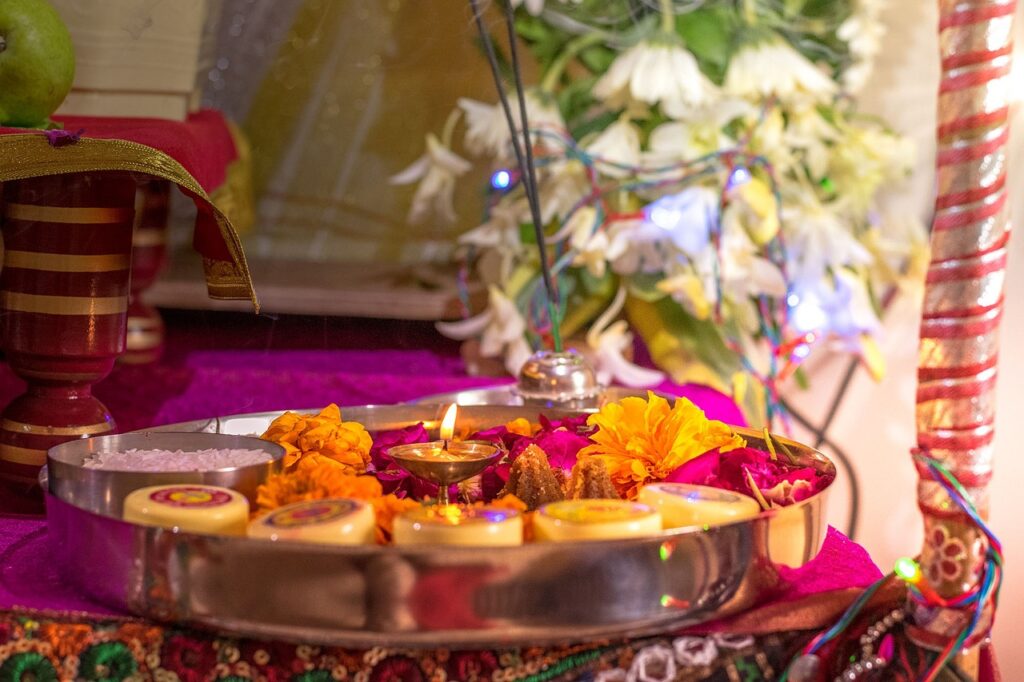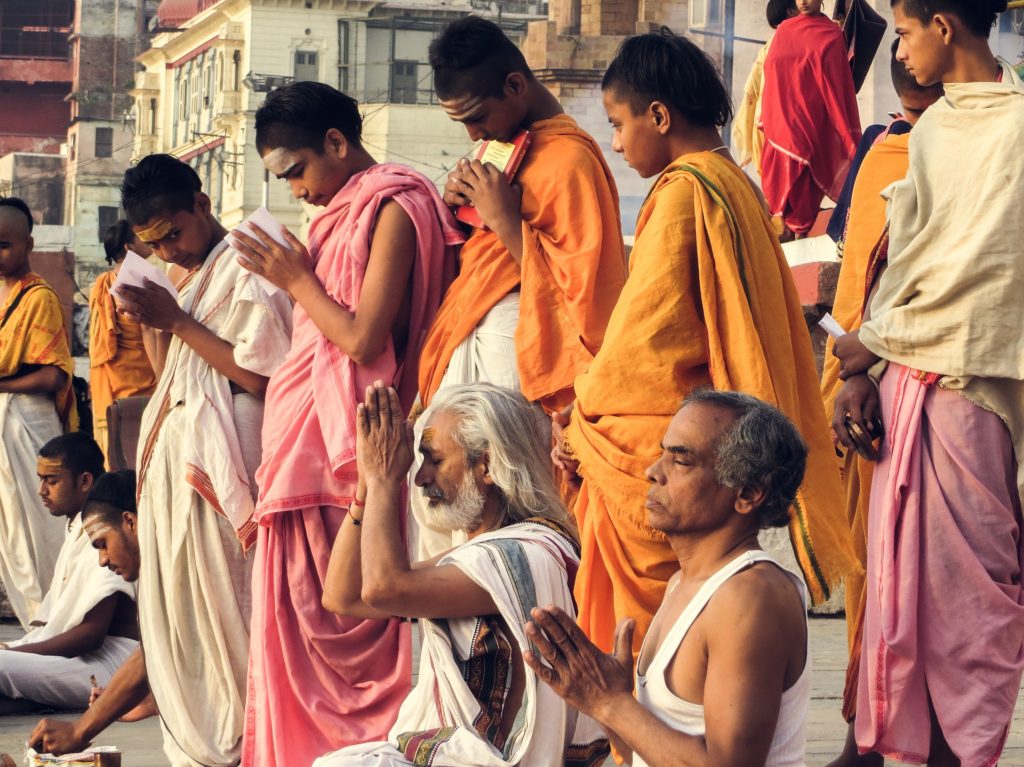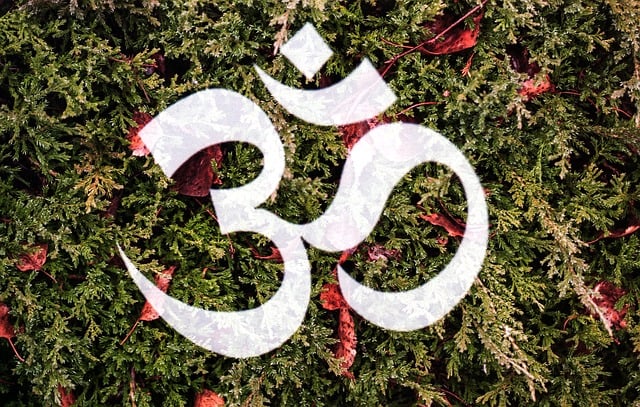
The use of symbols is of utmost importance in Hinduism, as it is an effective means of imparting the religion’s beliefs and teachings. These symbols, which are deeply rooted in Hindu philosophy, deities, cultural traditions, and teachings, are broadly categorized into mudras, which refer to hand gestures and body positioning, and murti, which refers to icons, statues, and drawings. Some of the widely recognized symbols in Hinduism include Om, the swastika, Trishula, lotus flower, lingam, Shanka, and lamp. The meaning of these symbols can vary depending on the followers’ country/region, culture and era. While some symbols, like Om, are unique to Hinduism, others, such as the swastika, have ties to other cultures and religions. During Hindu worship, murtis of various deities are used, and auspicious symbols are displayed in homes and temples to invite auspiciousness. The four Vedas, which are ancient Sanskrit texts, are the foundational texts of Hinduism (sanatan Dharma). They document the religion’s beliefs, rituals, and pastimes of the deities. While Hinduism varies across regions, cultures, and other factors, symbols, philosophies, and rituals are crucial in conveying the religion’s core beliefs and ideas. Many Hindu symbols have also been adopted into other religious traditions that came into contact with Hinduism. For example, the lotus is a commonly recognized symbol in both Hindu and Buddhist practices, and the trident has also been incorporated into religions such as Sikhism. Hindu worship involves various acts that utilize symbolism and visualization to create the appropriate mood and devotion into the practitioner.
In Hinduism, symbols hold great significance as they are believed to embody the divine when invoked with devotion and love. For instance, the murti of a deity is considered to be no different from the divine itself. As the Supreme Lord is the creator of all spiritual and material entities, it is believed that He takes on the form of a deity to accept service from His devotees. Many stories exist that illustrate deities responding to their devotees’ calls. For instance, the deity of Khira chora Gopinath in Remuna, Orissa, is said to have once stolen a pot of sweet rice and hidden it so that His beloved devotee Madhavendra Puri could later enjoy it.